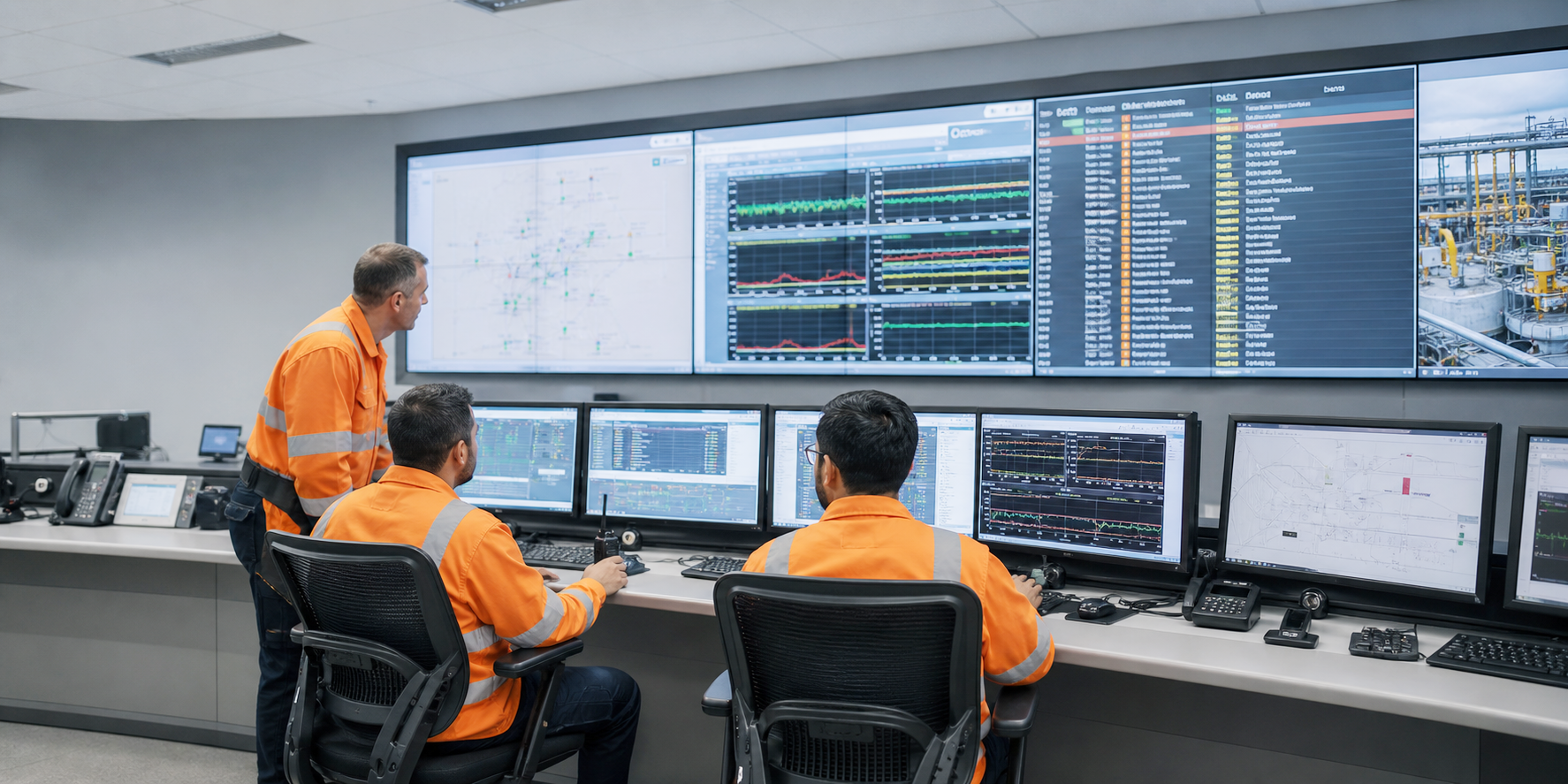

SCADA SOFTWARE / KEY FUNCTIONS
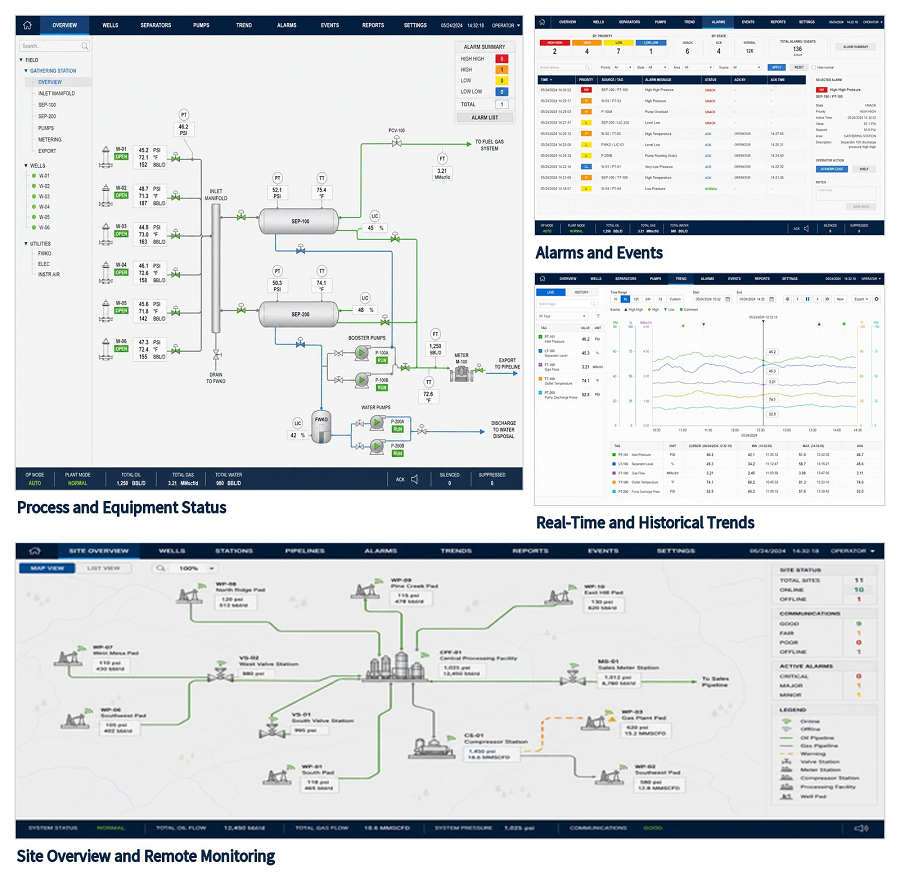
Key Features
Built for multi-vendor integration, distributed deployment, and long-term operation and maintenance.
PRODUCT FEATURES
| 01 | Multi-Vendor Device and System Integration | Connects PLC, RTU, DCS and SIS platforms, flow computers and intelligent devices through common industrial protocols and standard data interfaces. |
| 02 | Web-Based Architecture and Flexible Deployment | Browser-based architecture supports standalone, redundant, distributed and virtualized deployment for control rooms, regional centers and remote clients. |
| 03 | Data Continuity and Reliability | Preserves source timestamps, quality codes and communication status. Remote sites buffer data locally and backfill automatically after communications recover. |
| 04 | Alarm, Event and Operator Action Traceability | Alarms, events, historical trends and operator actions are recorded on a common time base for normal operation analysis, event queries and operational traceability. |
| 05 | Standardized Engineering and Version Management | Central configuration of tags, communications, graphics, alarms, history and reports, with template reuse, bulk configuration, online changes, version comparison and project rollback. |
| 06 | Cybersecurity, Access Control and Audit | Access is assigned by user, role, site and equipment scope, with authentication, secure communications, operator activity auditing, and remote access control. |
System Architecture and Deployment
The platform connects DCS, SIS, PLC, RTU and other control systems over industrial networks. Process monitoring and control, alarm and event management, and historical data access are provided through operator stations, engineering stations and web clients.
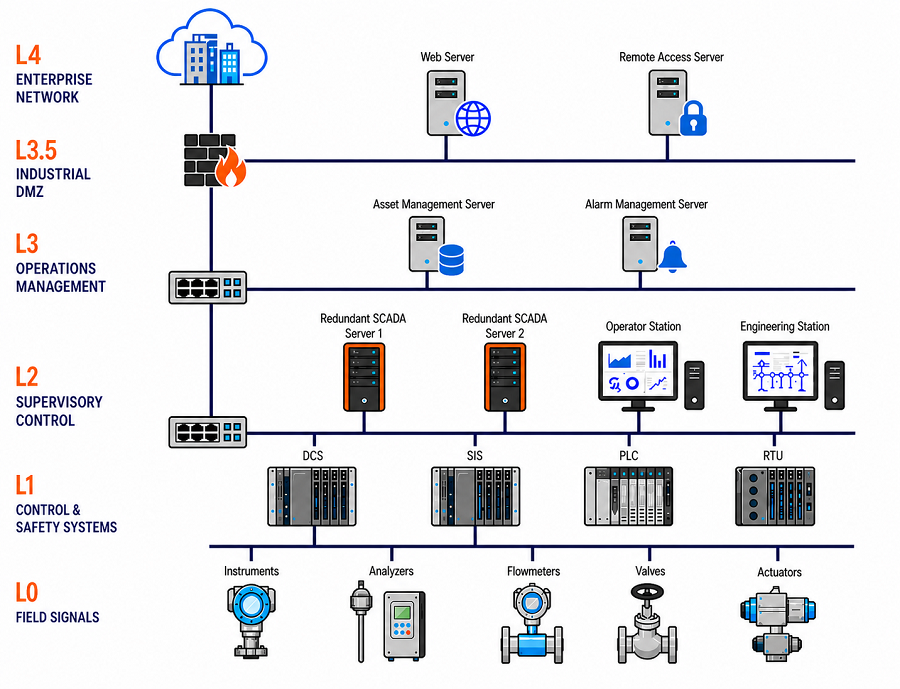
DEPLOYMENT OPTIONS
Deployment Options
01
Standalone Deployment
Centralized servers, engineering stations and operator stations in a single control room for standalone units, field stations and small production facilities.
02
Redundant Deployment
Critical servers and network components use redundancy and failover to limit the impact of single-point failures.
03
Distributed Deployment
Site-level acquisition, service and client applications hosted locally with centralized data management to consolidate operating data, alarms and historical records.
04
Virtualized Deployment
Servers and clients run in virtualized environments for elastic resource allocation, backup and recovery, expansion and centralized maintenance.
Browser-based architecture allows standalone, redundant, distributed and virtualized deployment options to be combined according to site scale, network conditions and availability requirements.
Specifications
Typical Applications
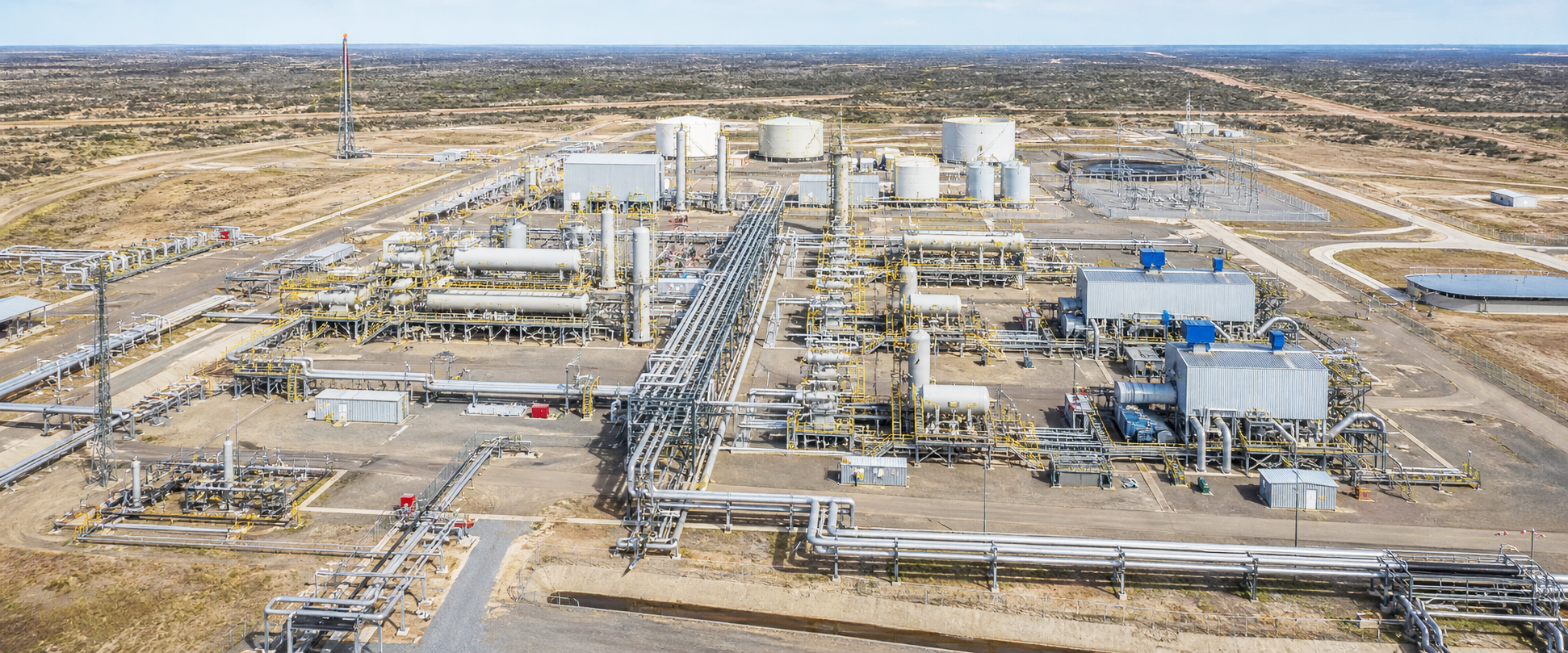
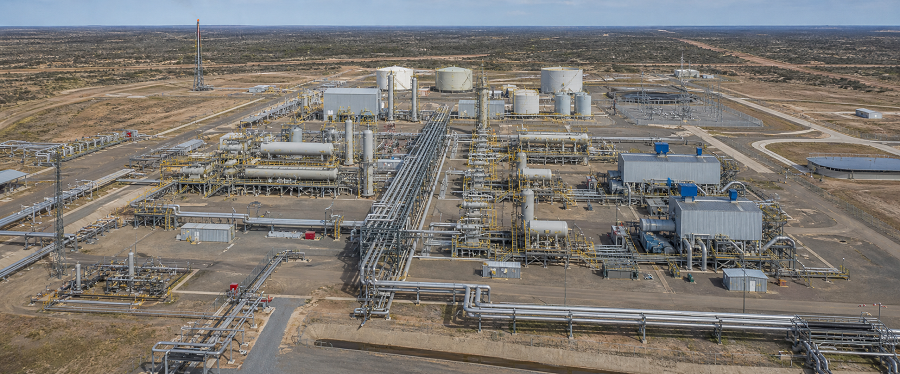
Applications cover wellheads and gathering facilities, long-distance pipelines, oil and gas processing and storage facilities, central control centers, and petrochemical, chemical and energy infrastructure.
APPLICATION SCENARIOS
| 01 |
Wellsheads and Gathering Acquires pressure, temperature, flow and equipment status from wellheads, gathering stations and pump stations, and centrally manages alarms, events and operational records. |
| 02 |
Long-Distance Pipelines and Valve Stations Monitors pipeline pressure and flow, valve-station status and communication links, and centralizes operating information for stations and remote facilities along the route. |
| 03 |
Oil and Gas Processing and Storage Facilities Monitors oil and gas separation, dehydration, desulfurization, compression, storage tanks and loading and unloading facilities, with alarm management, trend displays and historical data queries. |
| 04 |
Petrochemical, Chemical and Energy Infrastructure Provides process monitoring, alarm management and operational records for petrochemical and chemical plants, utilities and energy infrastructure. |
| 05 |
Central Control Centers Consolidates operating data from multiple plants, sites and remote facilities to support centralized monitoring, production dispatch and remote operation and maintenance. |
Engineering Configuration and System Maintenance
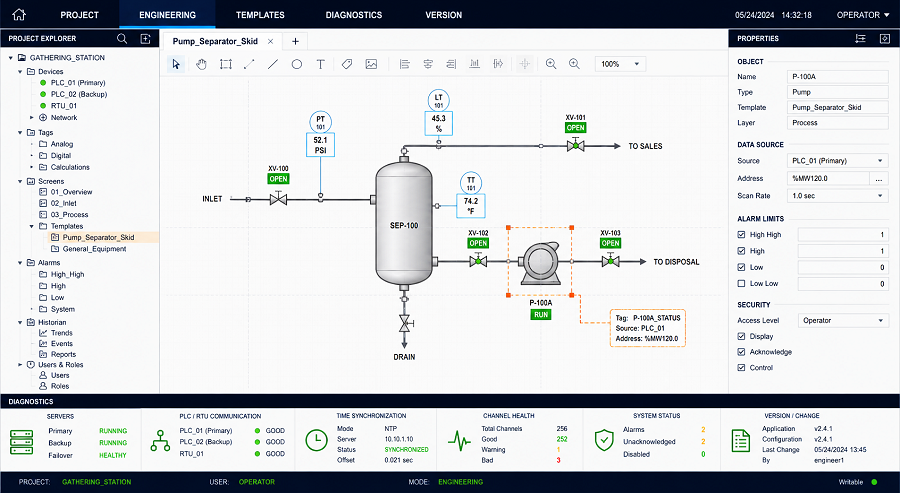
A unified engineering database supports system configuration, application engineering, template reuse, operational diagnostics and version management.
| 01 |
Engineering Database and System Configuration Centralizes configuration of devices, tags, communication parameters, alarms, historical data and access permissions. Supports I/O list import, data validation and bulk maintenance. |
02 |
Graphics, Alarm and Report Configuration Configures process graphics, faceplates, alarm strategies, trend display and operational reports using reusable standard objects and equipment templates. |
| 03 |
Template-Based Engineering and Bulk Configuration Reuses object templates and engineering configurations across sites to reduce repetitive work and maintain consistent project structures and configuration rules. |
04 |
Operational Diagnostics and Version Management Monitors communications, equipment and system health centrally, with engineering backup and recovery, version comparison, controlled changes and audit trails. |
|
Unified Engineering Workspace A unified interface supports system configuration, application engineering, online diagnostics, version comparison and engineering record management. |
 |
Project Delivery and Lifecycle Services
Services cover requirements analysis, system design, engineering implementation, testing and commissioning, operation and maintenance support, upgrades and migration throughout the SCADA system lifecycle.
SCADA SYSTEM / PROJECT SERVICES
| 01 | Requirements Analysis and System Design | Defines process flows, monitoring scope, alarm requirements, communication interfaces and network topology, establishing the system architecture, data scope and interface boundaries. |
| 02 | Engineering Configuration and System Integration | Configures servers and networks, establishes the engineering database, and configures device templates, process graphics, alarms, history, trends, reports, communication interfaces and user access. |
| 03 | Testing, Commissioning and Training | FAT, SAT and site integration testing verify communications, graphics, alarms, historical data, access rights and redundancy switchover. System commissioning includes operator and maintenance training. |
| 04 | Operation and Maintenance Support | Provides system health and communication checks, alarm analysis, historical data review, preventive maintenance, version management and troubleshooting. |
| 05 | Expansion, Upgrades and System Migration | Supports additional tags and sites, server upgrades, graphics and report updates, interface modifications and migration of existing systems. |
Deliverables include the engineering database, configuration files, test records, system backups, and operation and maintenance documentation, providing the basis for project acceptance, operation, and future modifications.