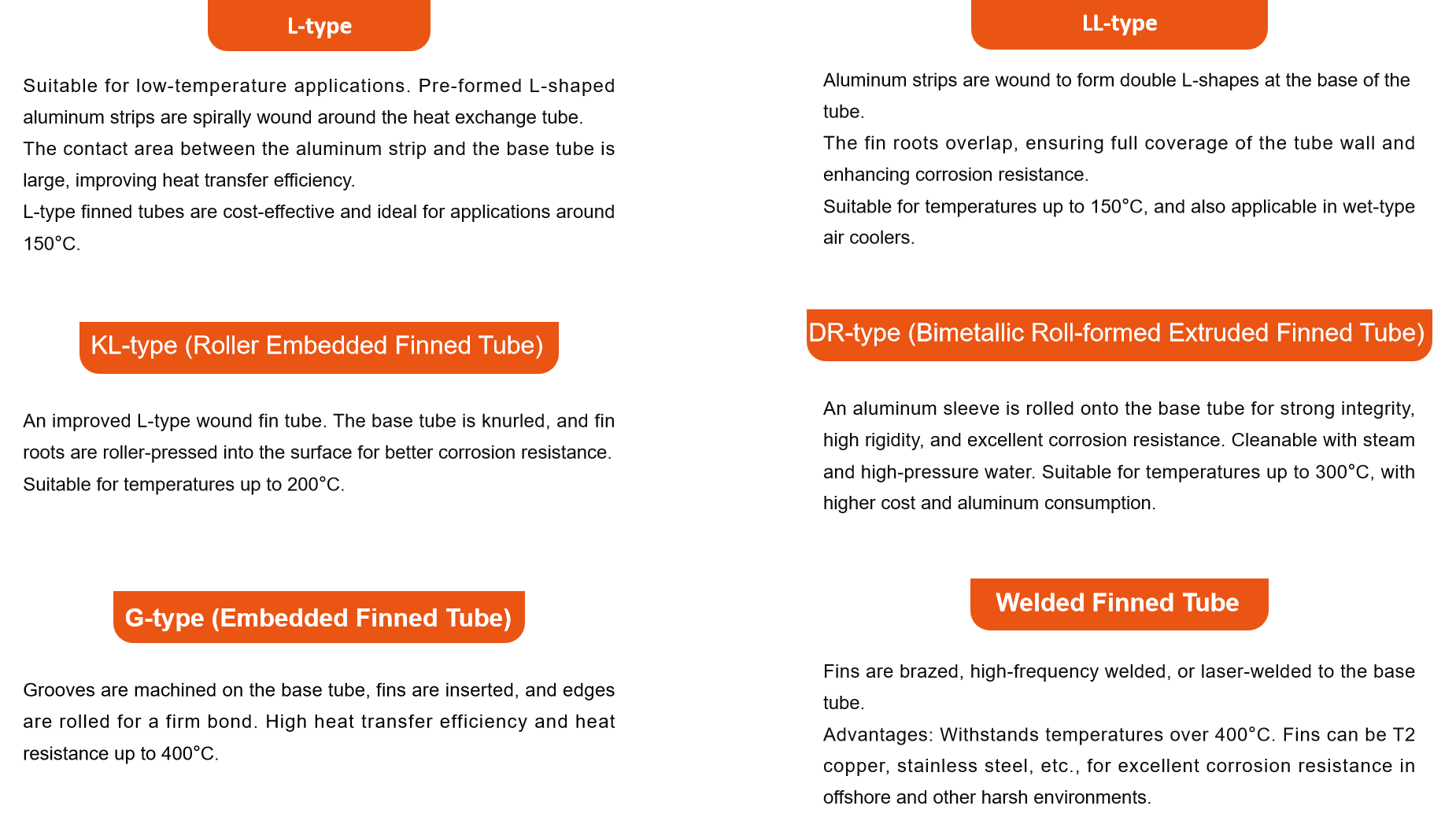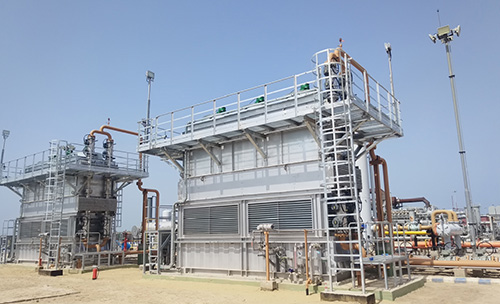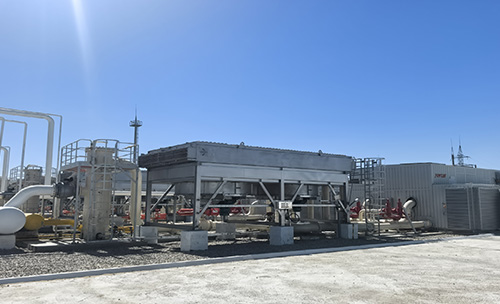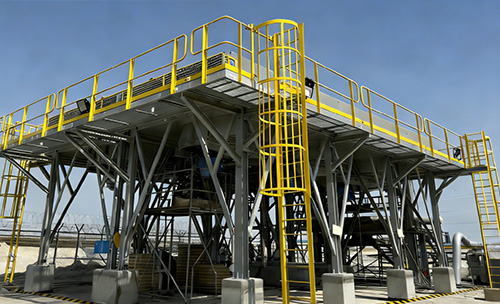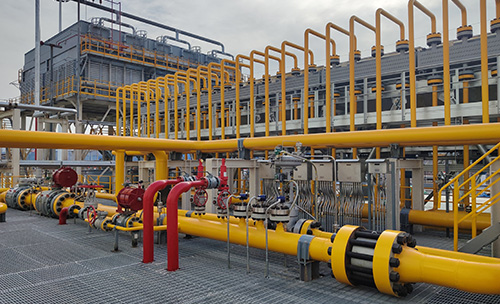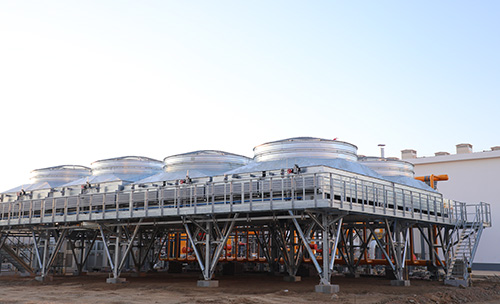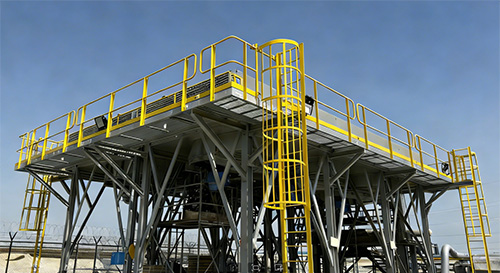
Horizontal Forced-Draft Type
Simple structure, easy maintenance: Core components (fan, tube bundles, supports) enable convenient installation and inspection, cutting maintenance costs and time.
Ground-level operation, enhanced safety: Fans and motors are located below tube bundles, allowing ground-based maintenance and balancing efficiency with safety.
Longer service life: Core parts operate at ambient temperature, reducing wear on bearings and belts, and extending equipment lifespan.
Energy-efficient operation: Low-temperature, high-density air intake boosts efficiency and reduces power consumption.
Flexible layout: Free space above tube bundles accommodates add-on equipment (e.g., silencers, water tanks), optimizing overall footprint.
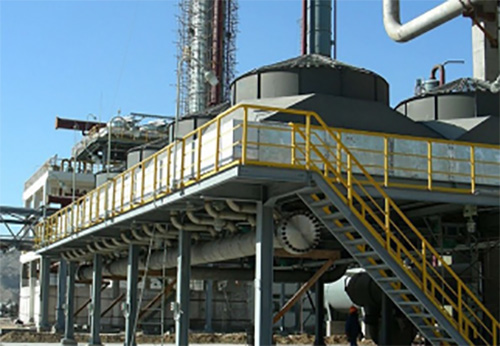
Horizontal Induced-Draft Type
Uniform air distribution: Uniform negative pressure in the plenum ensures even airflow through finned tube bundles, boosting cooling efficiency.
Minimal hot air recirculation: Air passes through bundles first, then is discharged upward at high speed for rapid dissipation.
Stable performance: Fan and duct above bundles shield against solar radiation and wind, maintaining consistent cooling.
Lower noise: Top-mounted fan design reduces noise emission, outperforming forced-draft air coolers.
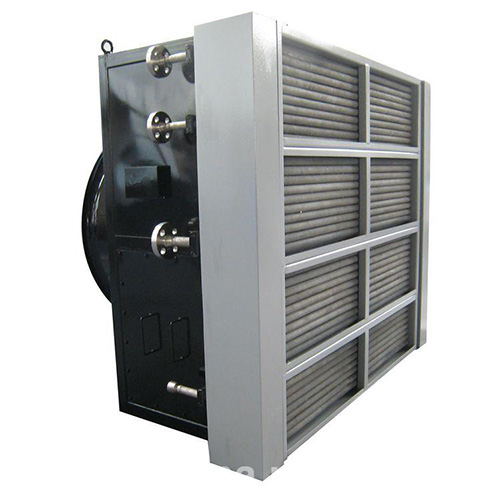
Side Blower Type
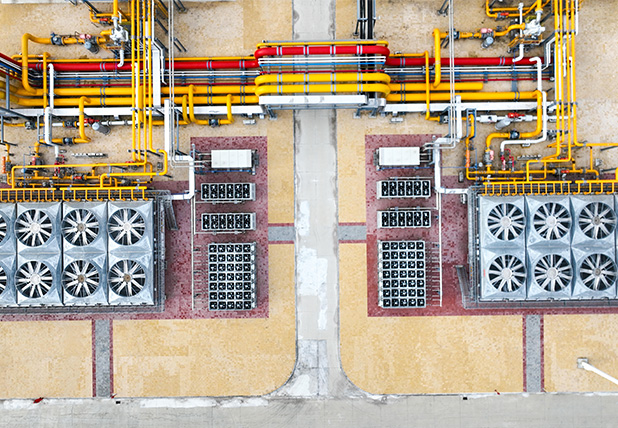
The side-blown air cooler is distinguished by its compact structure, ideal for moderate heat loads. Its space-saving design allows integration with compressor units on a single skid, boosting system integration. It is especially well-suited for mobile applications such as vehicle-mounted units.
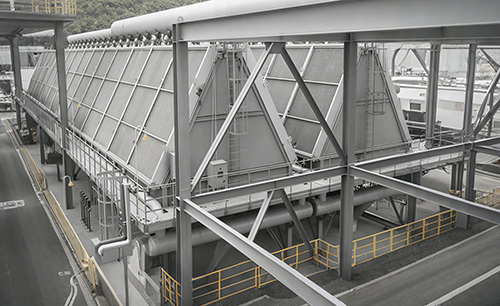
Sloped Top Type
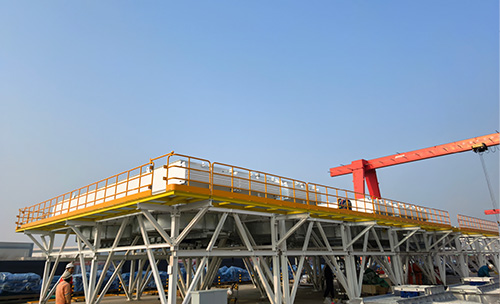
Small footprint: The sloped structure ensures compact layout, reducing footprint while maintaining cooling performance, ideal for space-limited sites.
Superior performance: Inclined tube bundles optimize fluid flow, reducing resistance and boosting heat transfer film coefficient, especially effective in steam condensation.
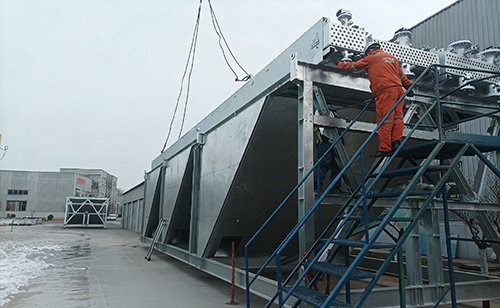
Prime Mover Driven Type
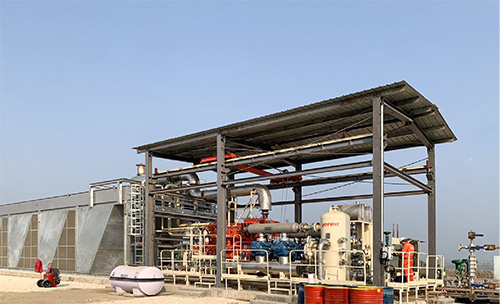
An engine drives the cooling fan via a transmission to deliver forced cooling for finned tube bundles.Ideal for sites with no on-site power or high electricity costs.
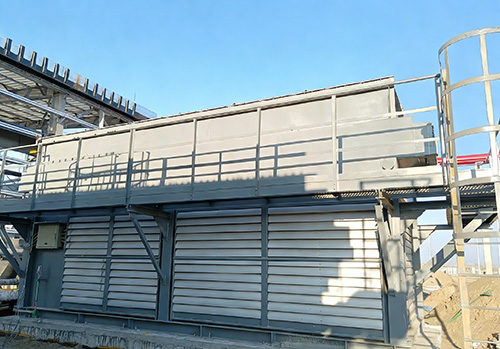
Hot Air Circulation Type (Internal Circulation)
Precise temperature control: Built on a forced-draft air cooler, it adds intake louvers and hot air channels for internal circulation, enabling precise control of process fluid cooling temperature.
Stable, safe operation: An automated control system monitors outlet temperature, dynamically adjusts parameters, and prevents freezing blockage from overcooling, ensuring reliable equipment performance.
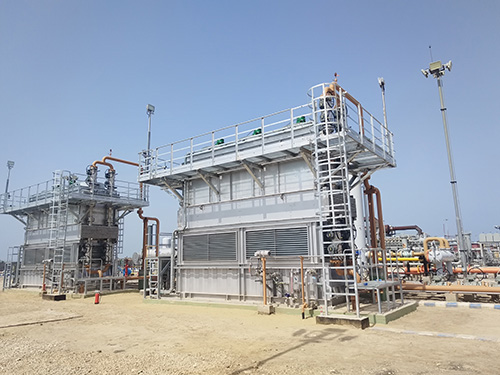
Surface Evaporative Type
High cooling efficiency: Uses air and water dual media with sensible heat exchange and latent heat of vaporization, outperforming conventional air coolers.
Clear core components: Finned tube bundles, bare tube bundles, fans, circulating spray system, and control components.
Simple working principle: Water is sprayed on bare tubes to form a film; air drawn in by top fans evaporates the film, absorbing heat to cool the medium inside.
Flexible operation: Spray system active in high temperatures for enhanced cooling; shut down in low temperatures for air-only, energy-saving cooling.
Key advantages: Cools medium below ambient dry-bulb temperature, approaching wet-bulb temperature, breaking conventional limits for high cost-effectiveness.
Fin Classification